Such a beautiful era
By Alexandre C.
The Belle Époque
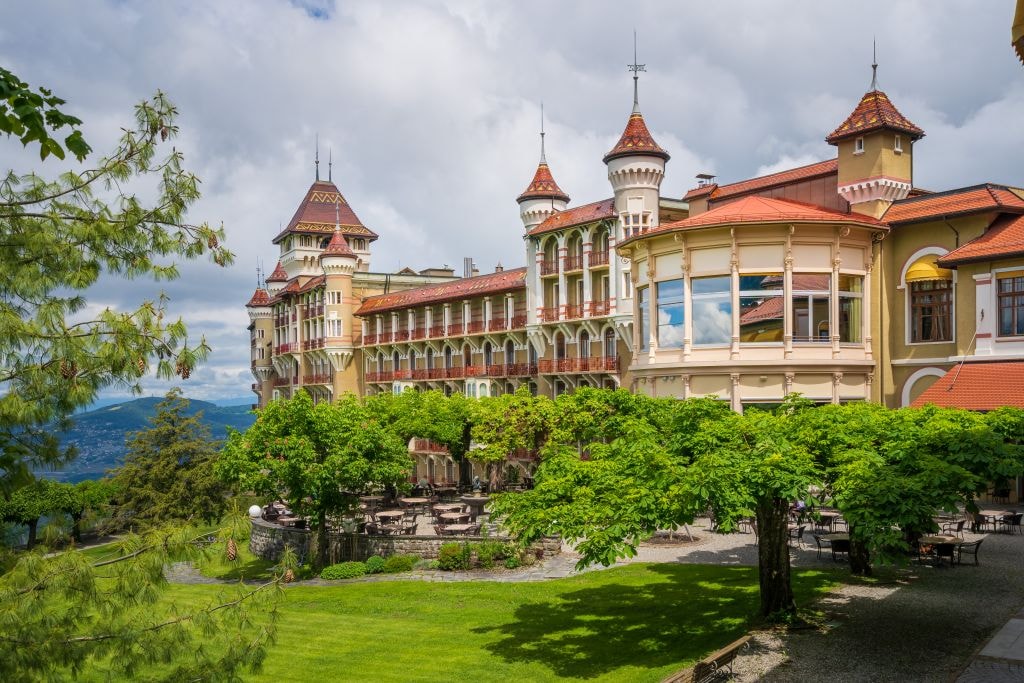
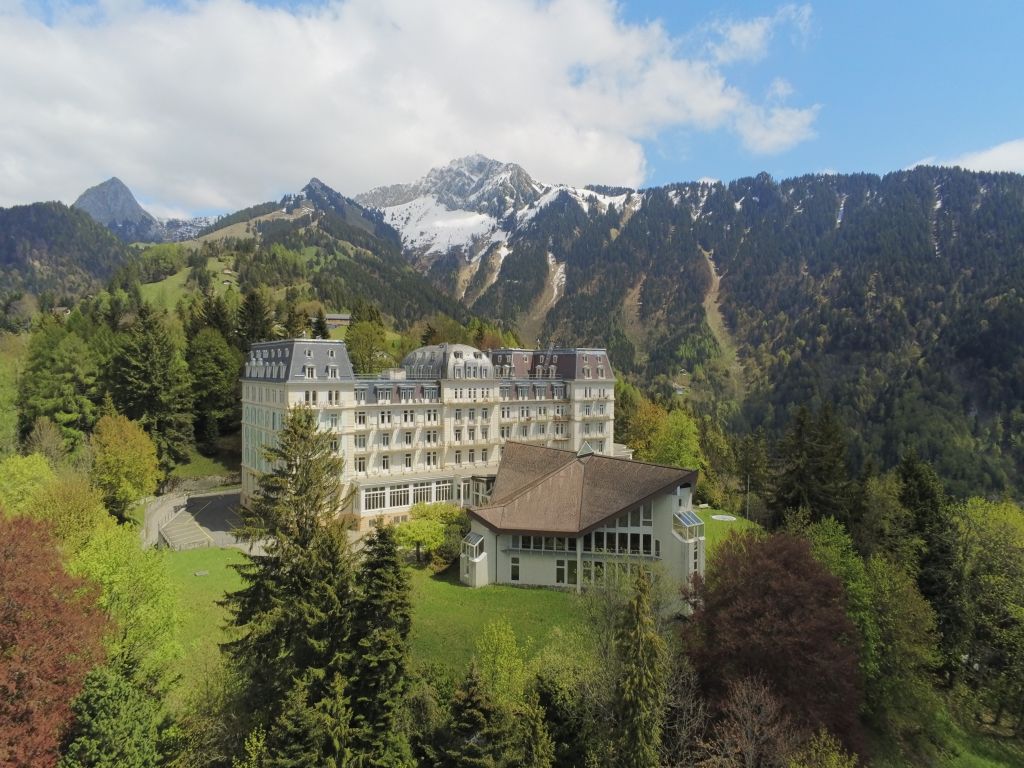
On the Riviera, the legacy of the Belle Epoque can still be seen in the landscape and architecture. Four emblematic hotels located at Montreux, Caux and Glion, the paddle steamers on Lake Geneva and the trains of the MOB railway company preserve the traces of a sumptuous era, offering visitors a unique voyage between tradition and modernity.
“You can almost hear the noise of the horse-drawn omnibuses which, at the beginning of the 20th century, took guests out on excursions”
Alexandre C.
A bit of history
The history of the Belle Epoque hotel business on the Riviera begins with the construction of the first buildings at Territet and Caux in 1870. This architectural and touristic movement is accompanied by new technical advances, notably the arrival of running water and electricity, allowing hotels to build bathrooms and lifts. In 1879, Hotel Engadiner Kulm at Saint-Moritz becomes the first in Switzerland to install electric lighting. The International Exposition held in Paris in 1889 brought momentum to all quarters, with an upsurge in stronger and more daring constructions. “All this enthusiasm for modernity results in comfort,” explains Evelyne Lüthi-Graf, an expert in the history of the Swiss hotel trade.
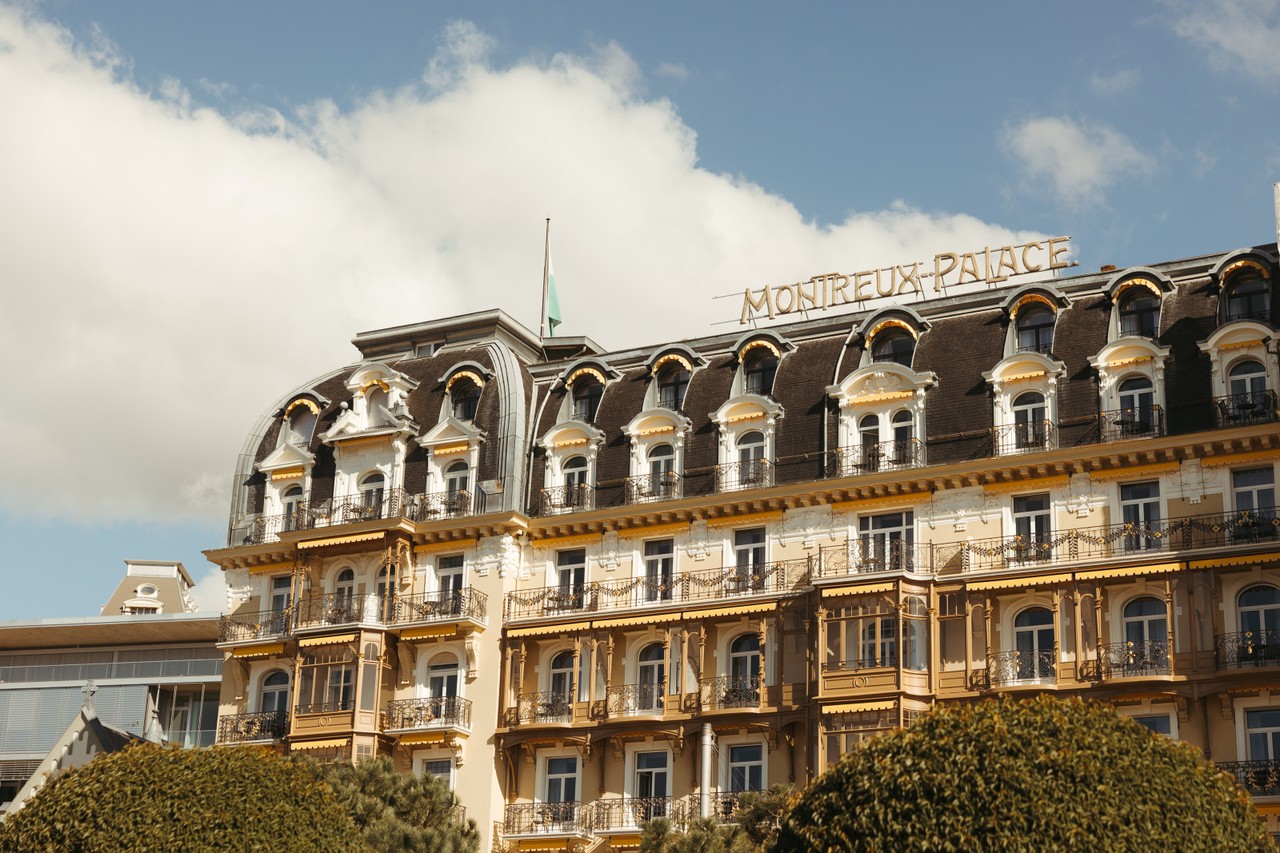
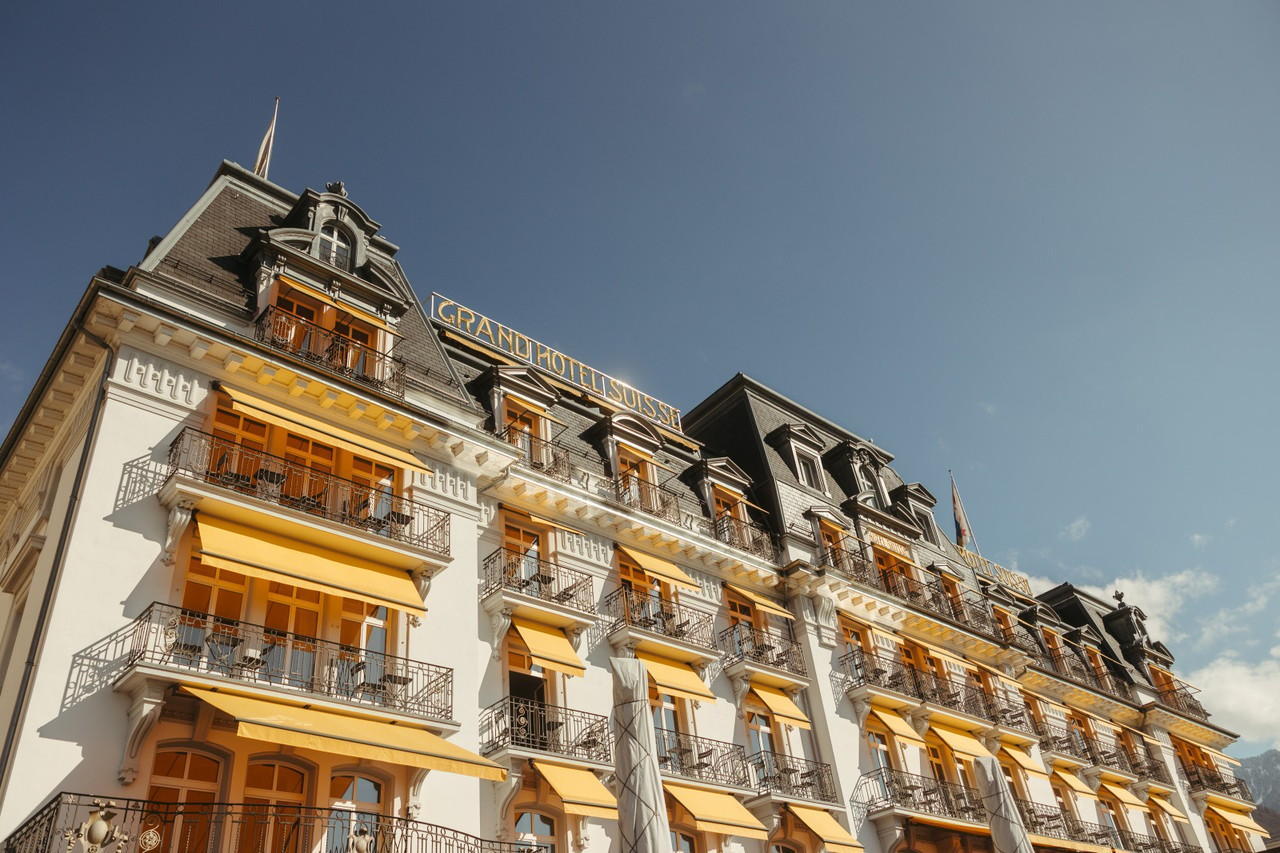
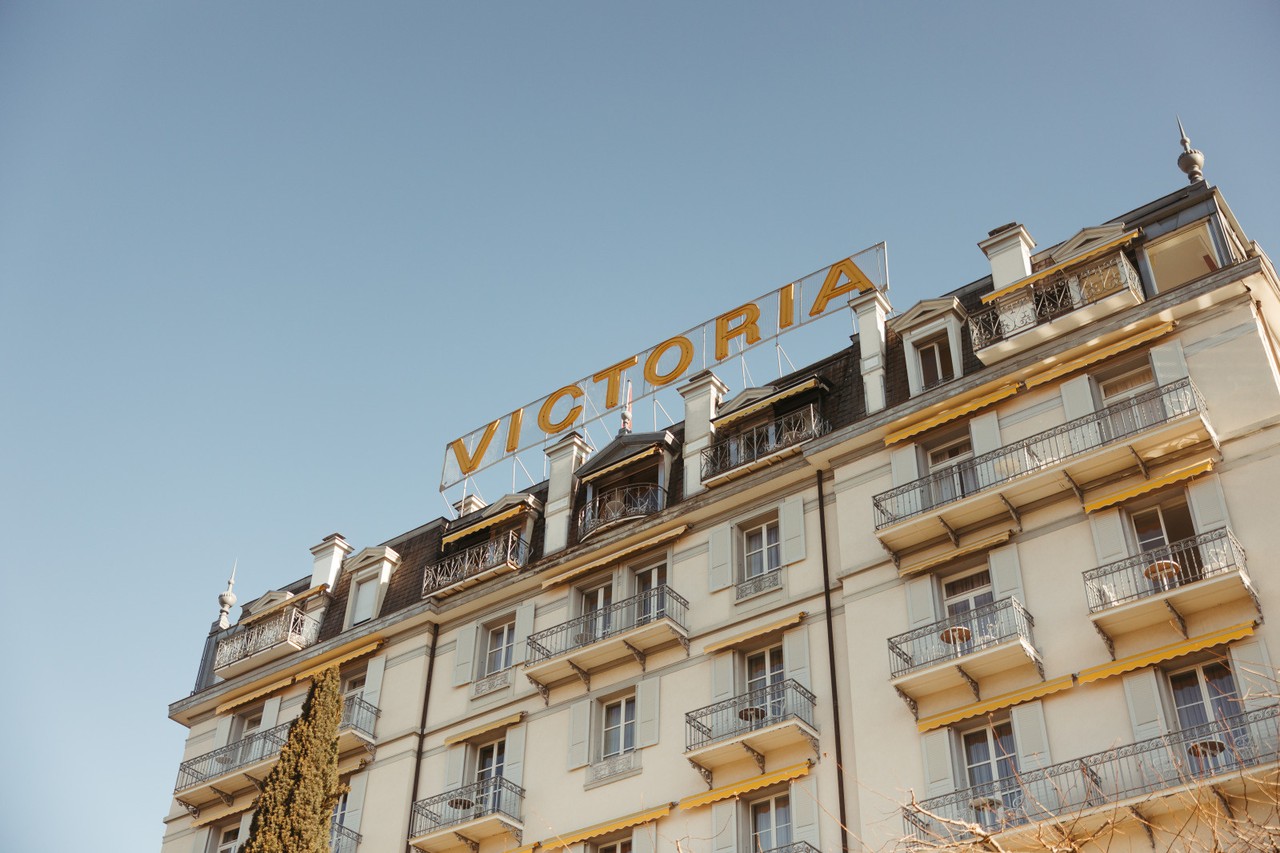
The four hotels associated with the Belle Epoque movement on the Riviera shared a common destiny: Built in 1870, the Suisse Majestic was extended in 1906 by Louis Villard, father of chansonnier Gilles, while in 1906, the Montreux Palace was built virtually overnight based on plans drawn up by Eugène Jost. He was also responsible for the Caux Palace, inaugurated in 1902. Initially named the Hôtel du Midi, the Victoria Glion was at the time a more modest facility used as staff accommodation. Over the years, however, it transformed itself into a more luxurious establishment.
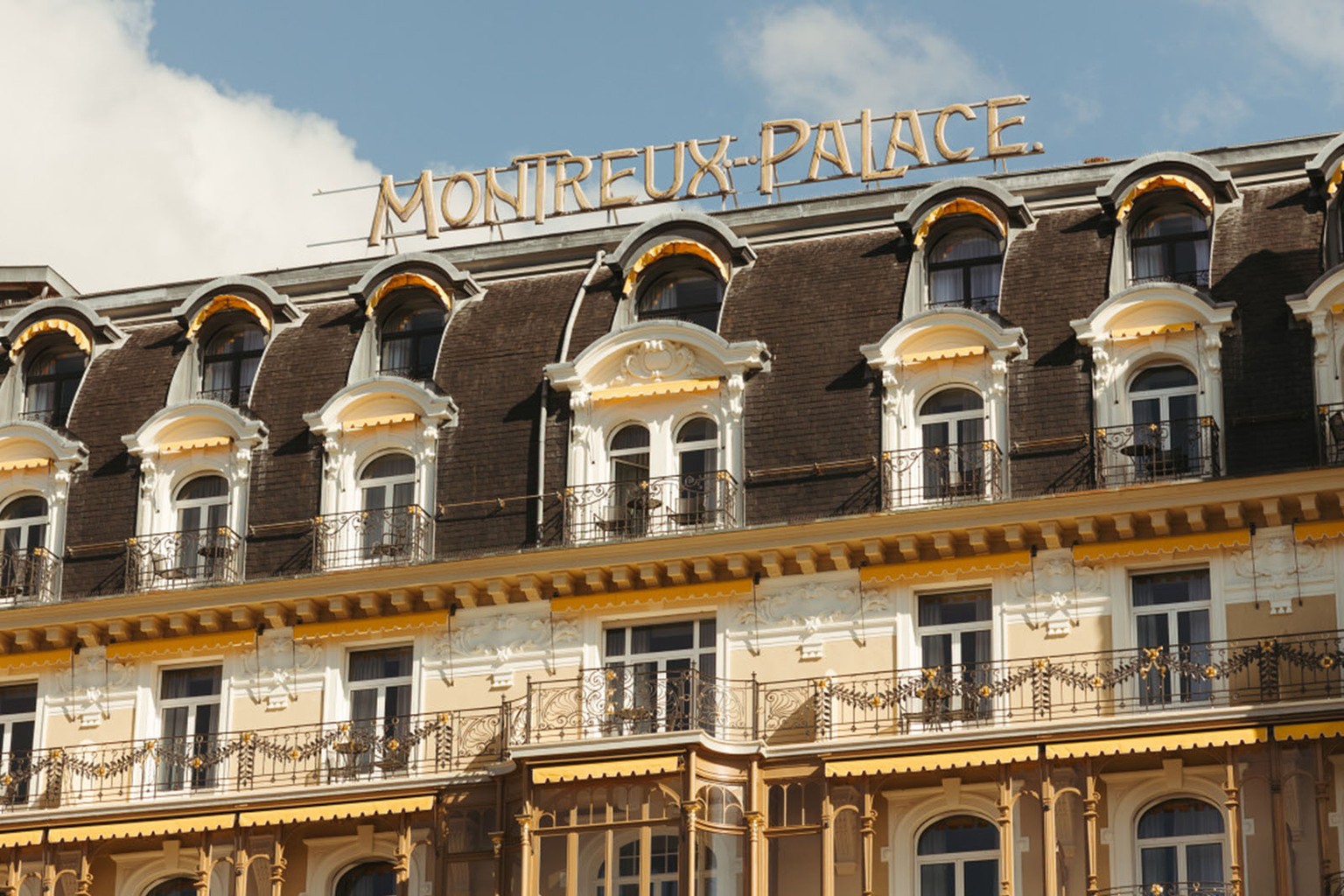
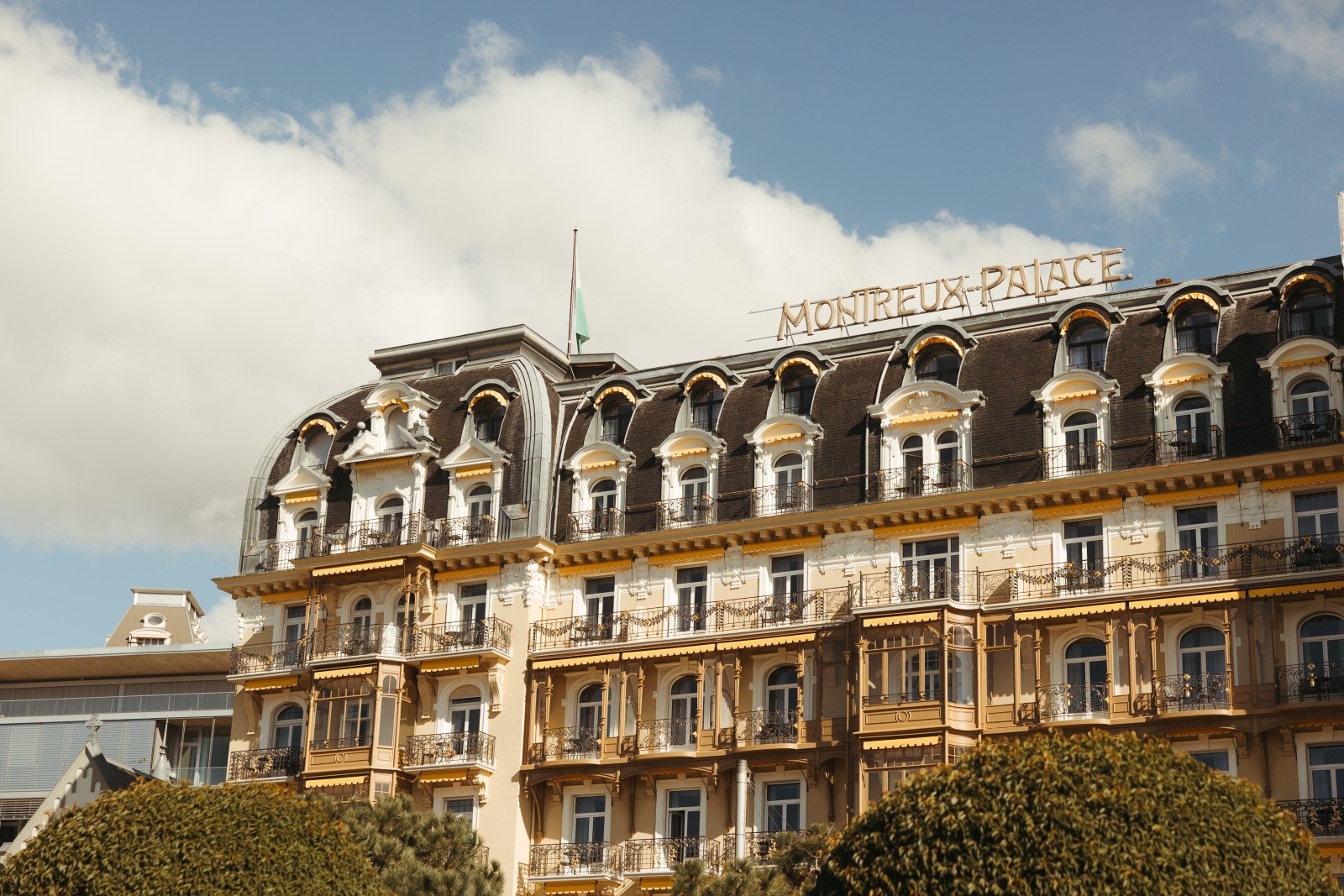
Fairmont Le Montreux Palace: a Palace that takes the name of the city where it was born
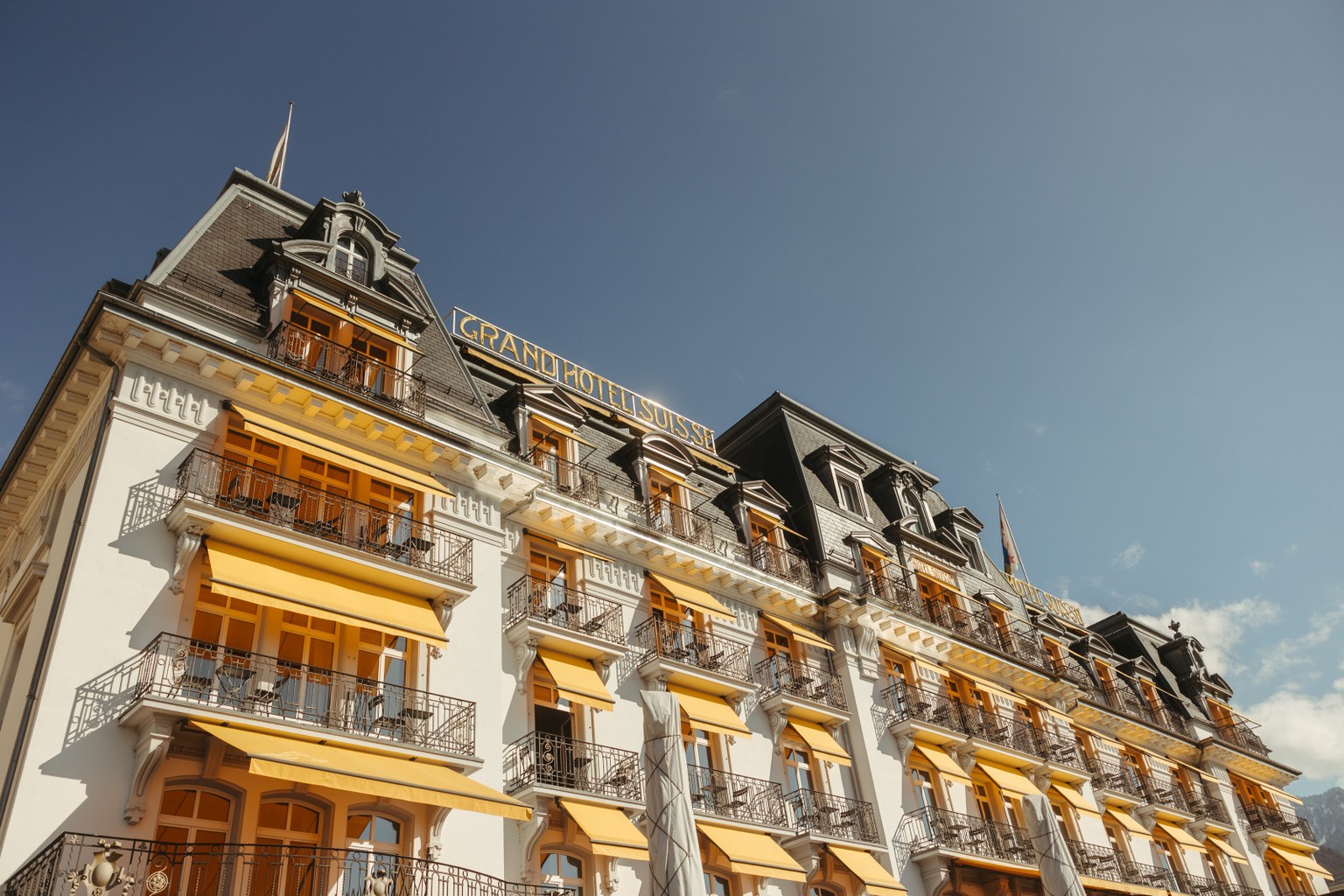
Grand Hôtel Suisse Majestic: a Grand Hotel opposite the station that proudly displays its Swiss identity
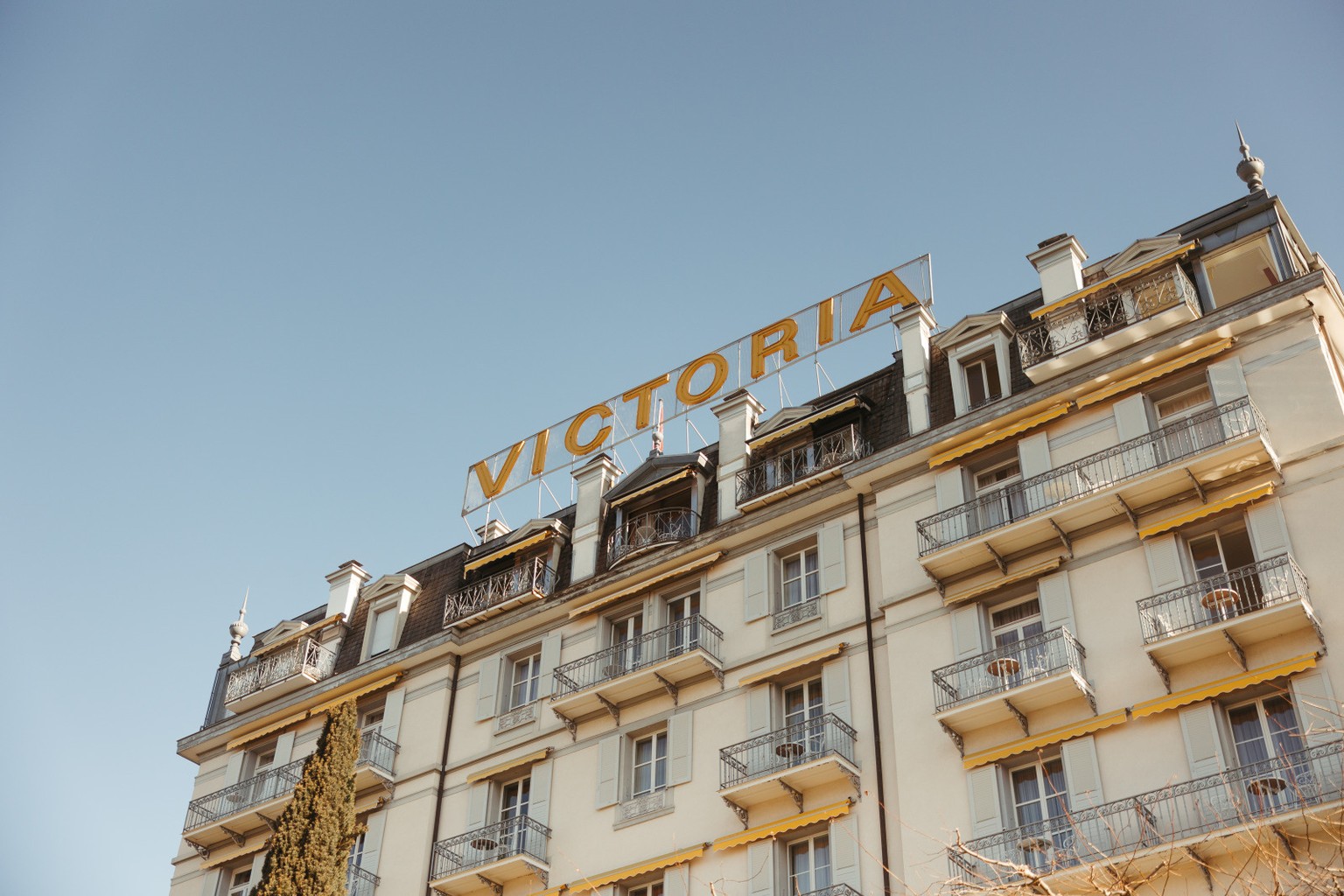
Hôtel Victoria: a small hotel that has grown but remained very intimate
A invitation to travel through time
The iconic yellow of the Swiss Majestic can be seen through the wooden-framed windows of the station at Montreux: two architectural structures designed by Eugène Jost that date back over a century. Just cross the road to discover, set in the bitumen, its name formed by a mosaic of little white stones. If you shut your eyes, you can almost hear the noise of the horse-drawn omnibuses which, at the beginning of the 20th century, took guests out on excursions.
Push open the door to the Swiss Majestic: inside we find the same little tiles, but this time on the walls, displayed in a design that is decidedly more modern and colorful. Note the timber structure of the hallway at Montreux station. The space resonates, echoing our encounter this morning with an artisan speaking in the unmistakable accent of Marseille. He offered us a passionate description of the meticulous care applied to the materials – varnishes and putty from bygone days – when restoring one of the 2400 windows of the Caux Palace. He smiles when we dare to ask him if he obtained such knowledge from a book about the Belle Epoque. He learned his craft from his predecessor, who passed down all his skills, acquired from 32 years spent maintaining this luxury hotel, by word of mouth.
Resonance also comes to mind in the Grand Hall of the Caux Palace, which can accommodate up to 300 people. Its singular iconic echo was even captured in the recent RTS series “Winter Palace”, which recreated the splendor of 1899, frequently lit by candlelight, during several months of filming.
The secrets and hidden passageways also make up the charm of the Victoria Glion, another excellent example of the region's Belle Epoque hotels. There, an inconspicuous door from the hotel's largest suite gives direct access to the conference room. At the Caux Palace, a workshop of eight craftsmen tends to its star-shaped, chrome-plated faucets, marked “chaud” and “froid”, with painstaking skill: even the charm of yesteryear cannot do without maintenance. At the Victoria, the hotel opted for modern installations inspired by the style of bygone days, baptized by their supplier with the name “Montreux”. An establishment that does not just seek to preserve tradition, but is also anxious to offer a level of comfort that meets modern-day standards.
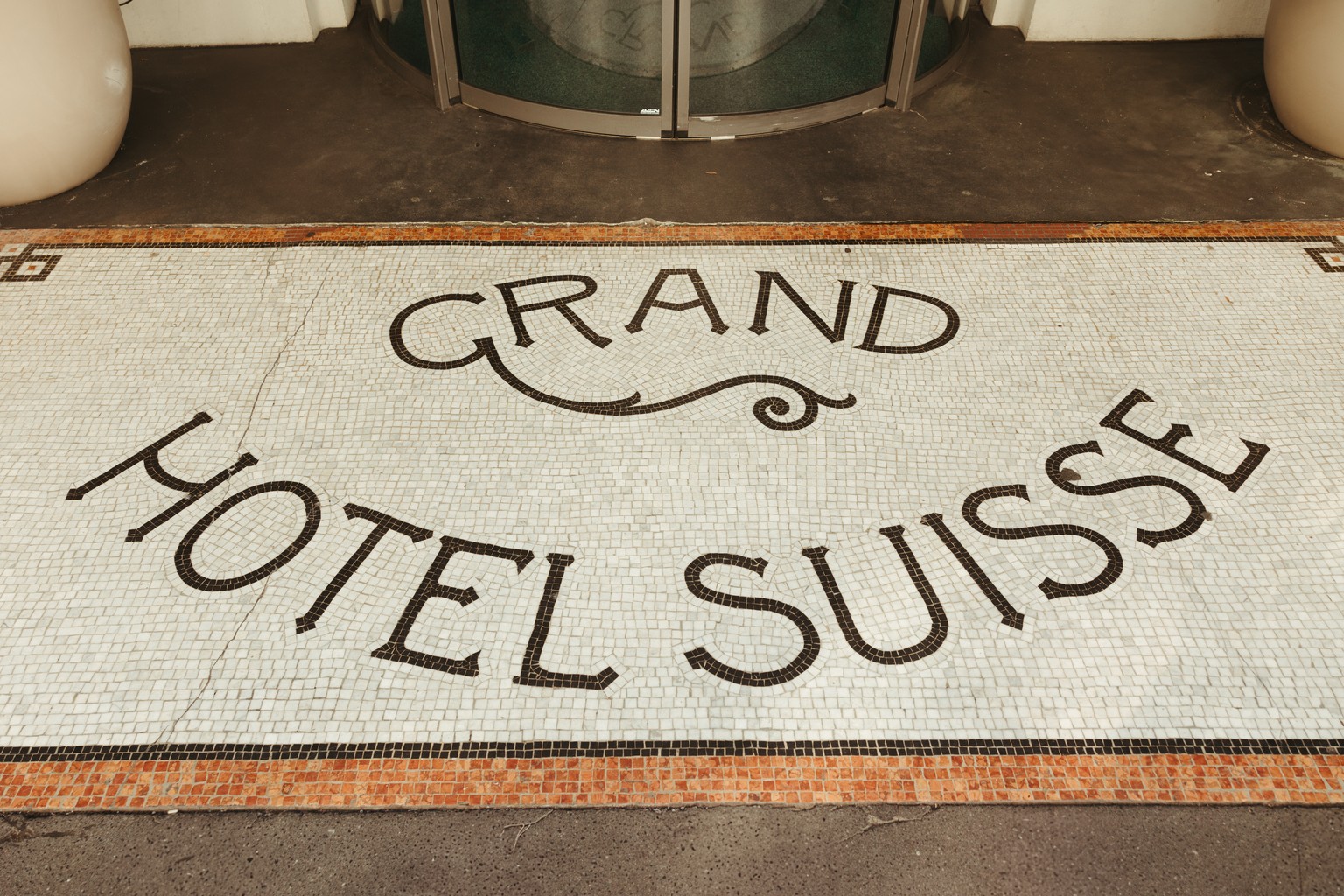
The 1906 mosaic, an invitation to step through the doors of the Hôtel Suisse Majestic.
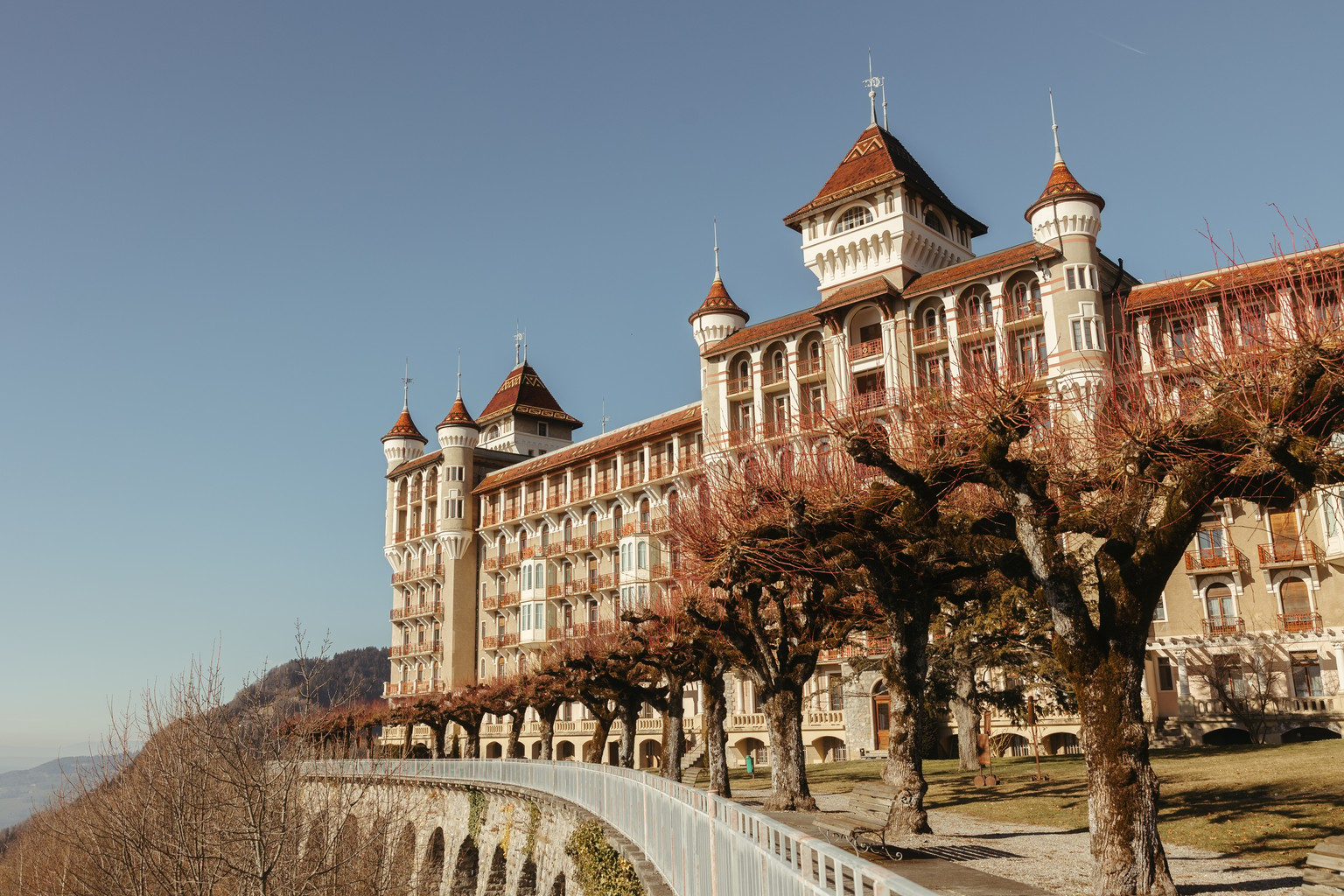
The vast terrace boulevard of the Caux Palace, offering a dizzying sense of scale.
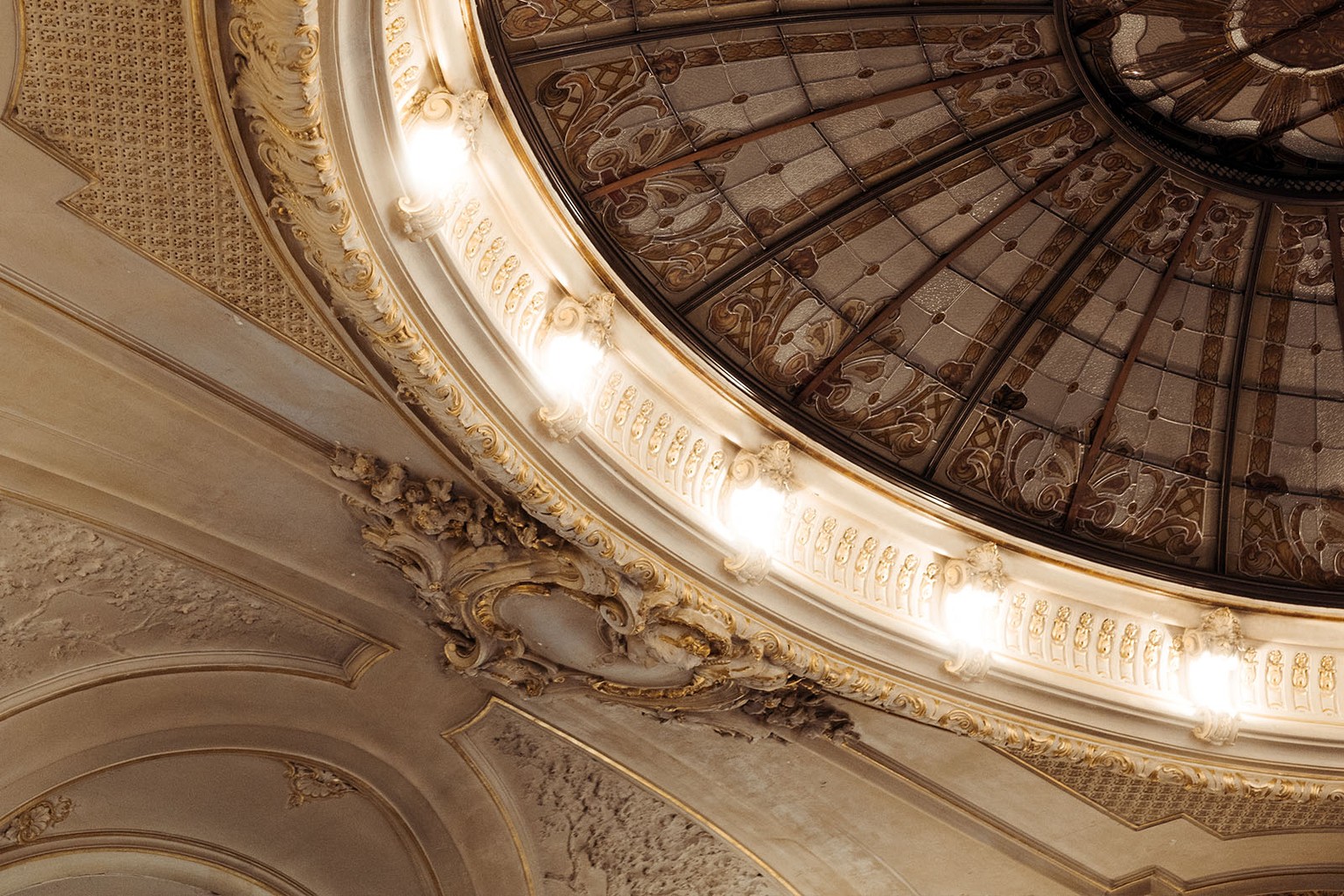
The majestic glass dome of the Montreux Palace salons, enough to make your head spin.
"Swiss hotels have often been at the forefront of innovation”
Alexandre C.
From stained glass to the hydraulic lift
The region of Montreux very quickly understood that its unique microclimate, located between lake and mountain, afforded it a privileged position, combining the advantages of Zermatt and Geneva. In the Belle Epoque era, it attracted English tourists with its winter sports and competitions: a bobsled run at Glion, skiing at Rochers-de-Naye and skating at Les Avants. It is amusing to see how nowadays, the Montreux Palace proudly displays a poster of the Lebrun brothers, new stars in the world of table tennis, while attending a European tournament. At each hotel, you should take your time, slow down and forget the frenzied pace of modern-day life to immerse yourself in history.
Sometimes, a simple key can open a door into the past: like this collection of implements from years gone by, displayed at the entrance to the Victoria at Glion, or the button-operated locks at the Caux Palace, where a code is required to access the bedrooms. At the Swiss Majestic, don't go straight to the lift, as there are veritable treasures to be found in the stairwell. There, the space is bathed in an unfamiliar light by decorative Art Nouveau windows by Édouard Diekmann featuring flowers, the sun and transparency.
At the Caux Palace, it is a completely different relic that reminds us of the technological advances in that era: its hydraulic lift, directly powered by the local water source of the village. An achievement that prompts us to remember how Swiss hotels were often at the forefront of innovation, like the Kulm Hotel Saint Moritz, which was the first establishment to install electricity in 1879.
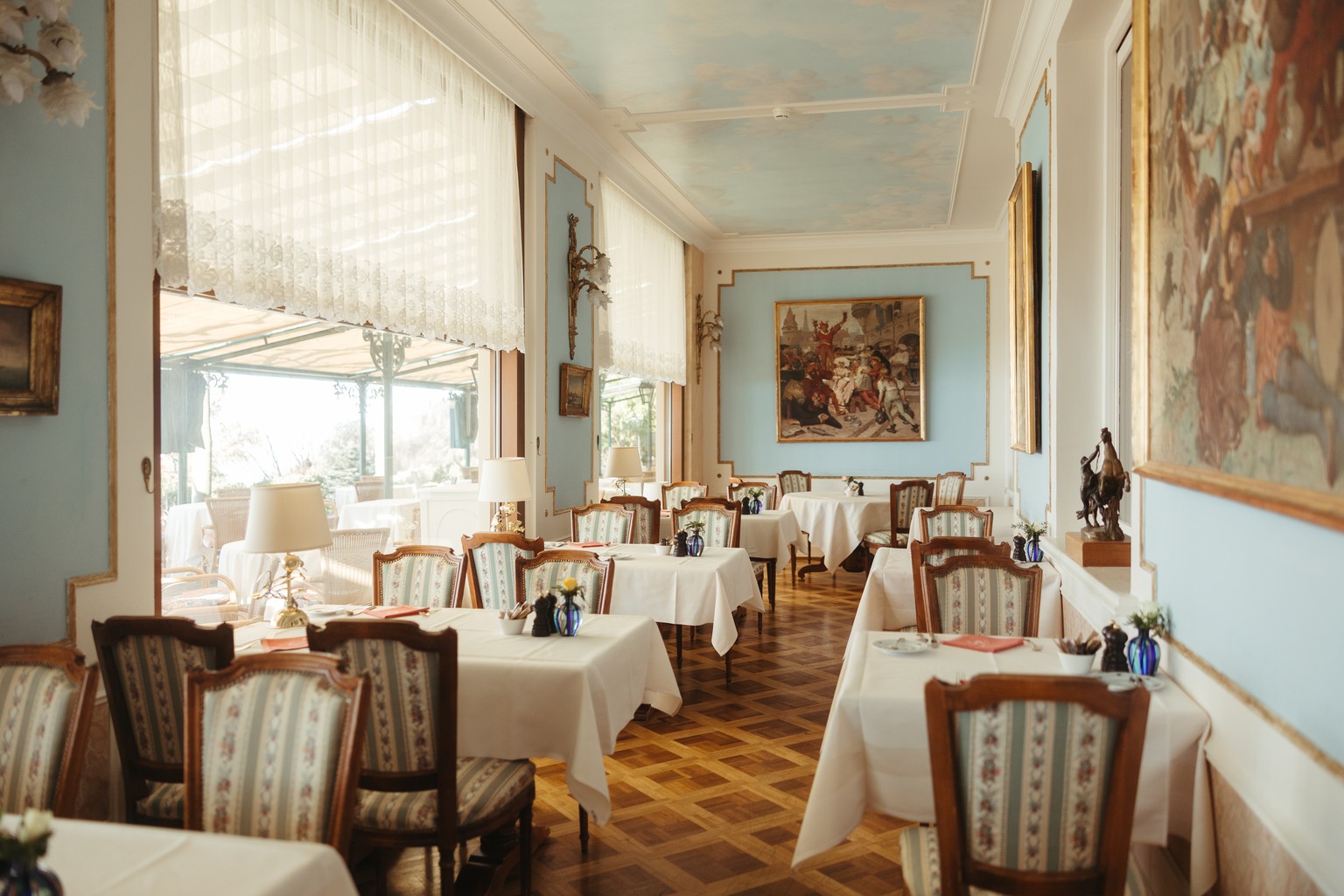
The intimate dining room of the Hôtel Victoria, furnished in Louis XVI style and adorned with works by the Geneva painter Édouard Ravel, uncle of the composer Maurice Ravel.
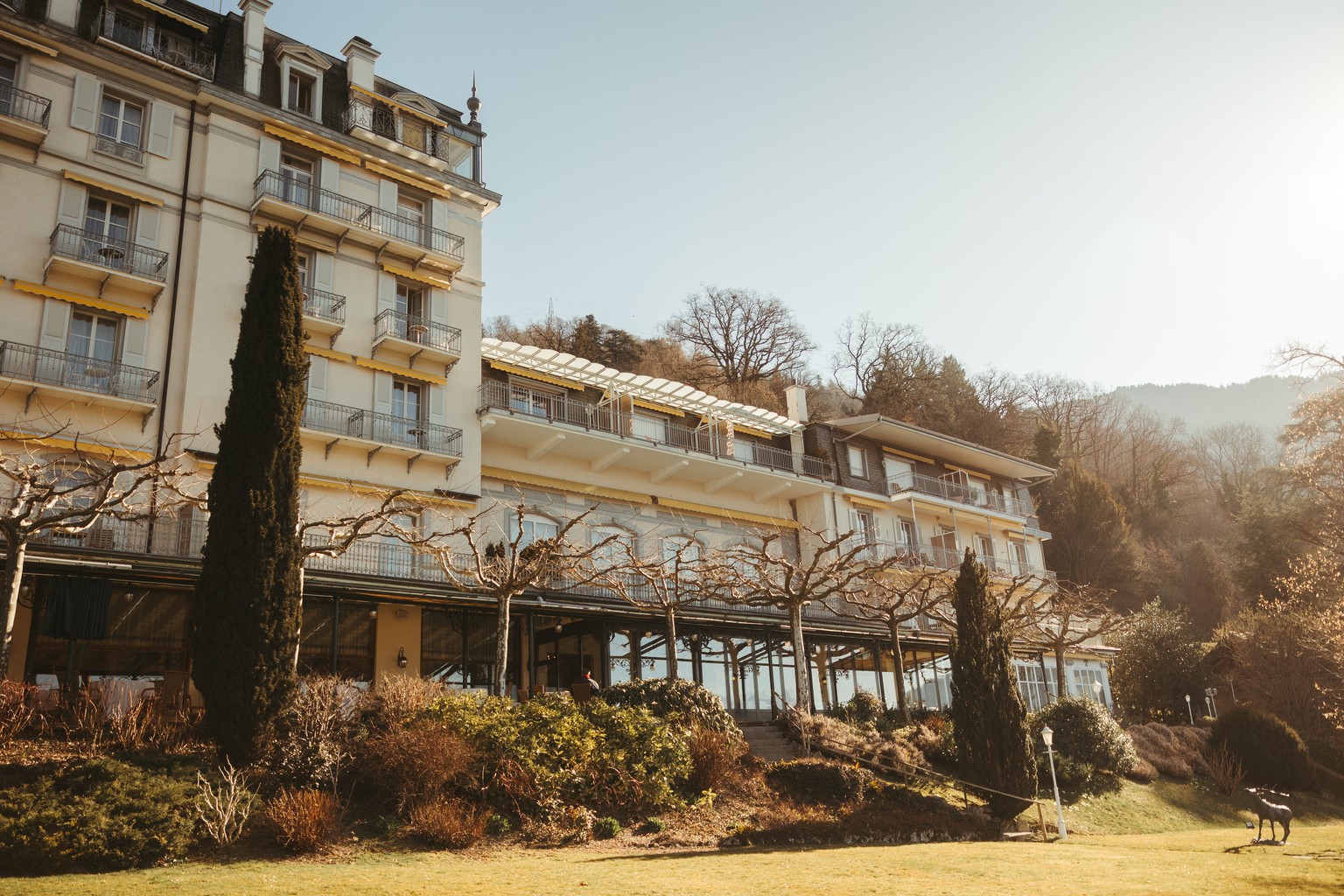
The glass veranda of the Hôtel Victoria, built as early as 1891, blending seamlessly with the lush nature of its garden.
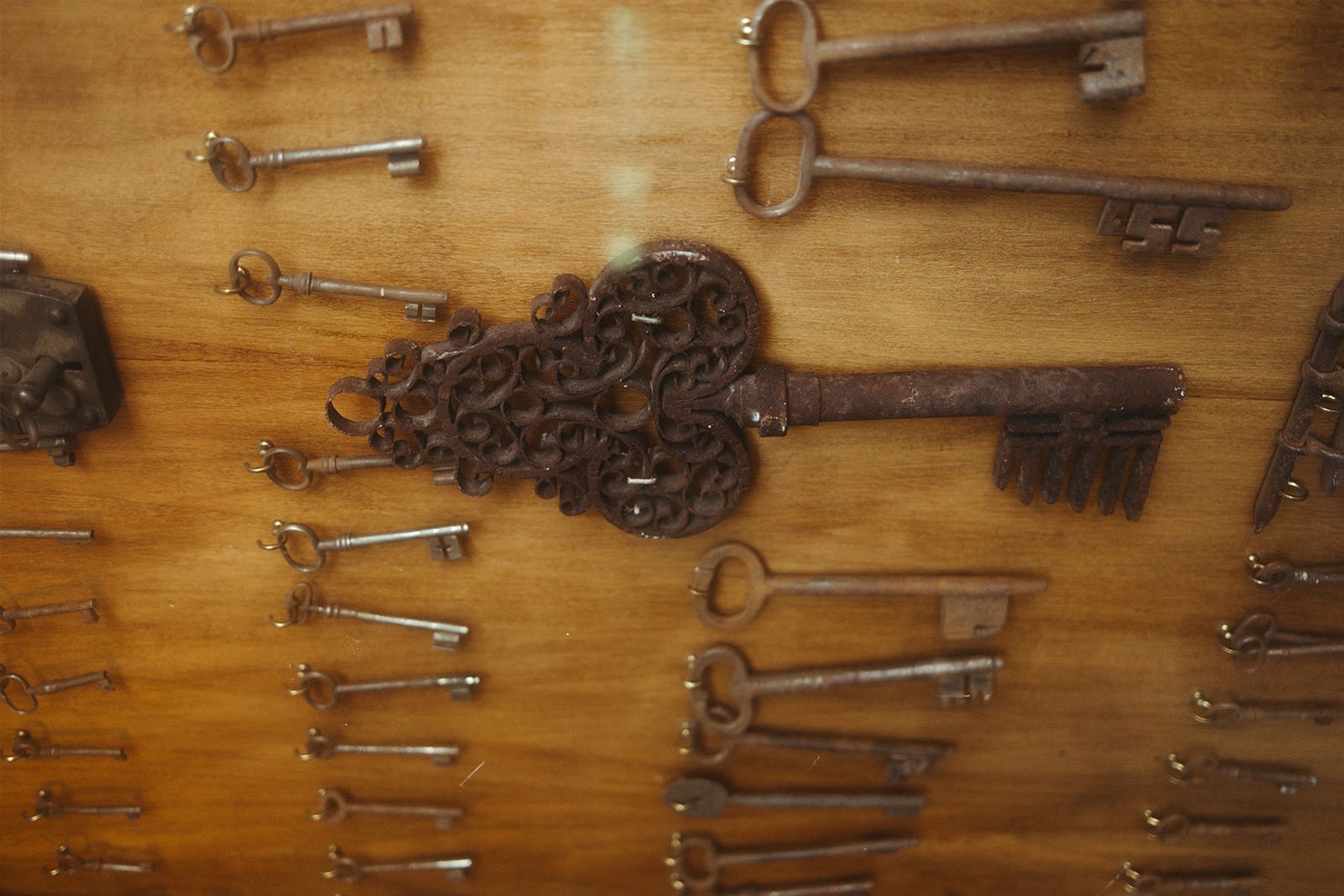
The room keys, at the origin of the highest distinction awarded to concierges: the Golden Keys — so impressive they might well belong to Saint Peter himself.
“At each hotel, you should take your time, slow down to immerse yourself in history”
Alexandre C.
From prestigious luxury hotels to more modest establishments
The basement of the Montreux Palace rocks to the vibrations of the dynamic nights of Montreux Jazz Festival. Travel back to a bygone era by going upstairs, climbing the white marble steps, to discover the sign “SALON DE BRIDGE”. It leads into a vast space of cavernous dimensions. One can imagine the card games taking place here, besides wainscoting and frescoes featuring chivalrous figures and ladies in silk dresses, as well as verdant landscapes, all bathed in the soft glow from the ceiling lights. A glass cabinet showcases brown and white slippers from 1900: comfort for the wearer guaranteed. But what footwear to choose if we are to rediscover the ways of an era when tourism revolved around rest and contemplation, and the art of the ballroom reigned supreme?
We could try to adopt the language of writers, that of Francis Scott Fitzgerald, who, in Tender Is the Night, portrays Caux, where his wife Zelda was being treated for tuberculosis. He describes his arrival on the mountain railway: “Almost overhead was Caux, where the thousand windows of a hotel burned in the late sun (...). They skirted a lost streak of wind with the hotel growing in size at each spiral, until...they were there, on top of the sunshine.” But Fitzgerald's essence, his whisper, also resonates through expressions such as a “helpless first love” or “a sort of drunken flush pierced with voices that did not know how much he was loved”. Fascinating to think that these words took shape here, at Caux, alongside a promenade where a 50-meter stone wall underpins a château-like structure with towers and turrets that would not look out of place in a fantasy film.
This unconventional promenade also featured in the writings of poet Rainer Maria Rilke, while he was convalescing at the Victoria. At Glion and Caux, avenues of trees lined with benches are still the perfect place to gather new strength, strolling along to the crunch of gravel underfoot. The Caux Palace shut its doors at the end of the 1930s with the outbreak of the Second World War. It nowadays belongs to the Caux Initiatives of Change Foundation, whose vision is to achieve a just, peaceful and sustainable world. It regularly organizes cultural events and monthly guided tours.
The hotel business during the Belle Epoque also included more modest establishments, as well as numerous guesthouses which were used by the wealthy as lodgings for their servants, while they themselves stayed at luxury hotels for several months. When constructed in 1869, the Victoria was known as the Hôtel du Midi. It offered simple, rather cramped rooms, and this is why this currently four-star superior establishment features different styles and eras following redevelopment and refurbishment over the years: an extravagant melange of interiors.
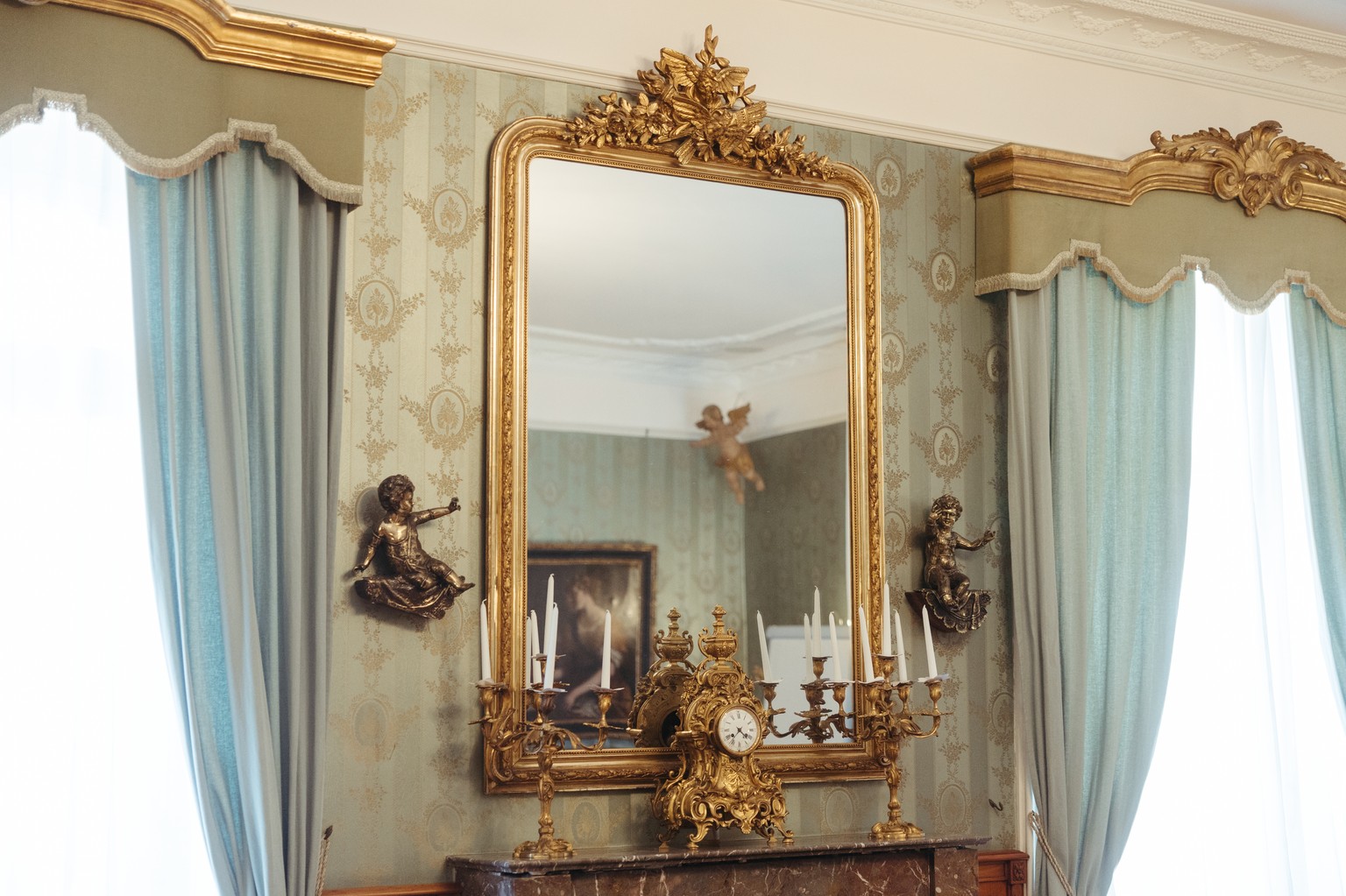
A mirror of style inside the Hôtel Victoria.
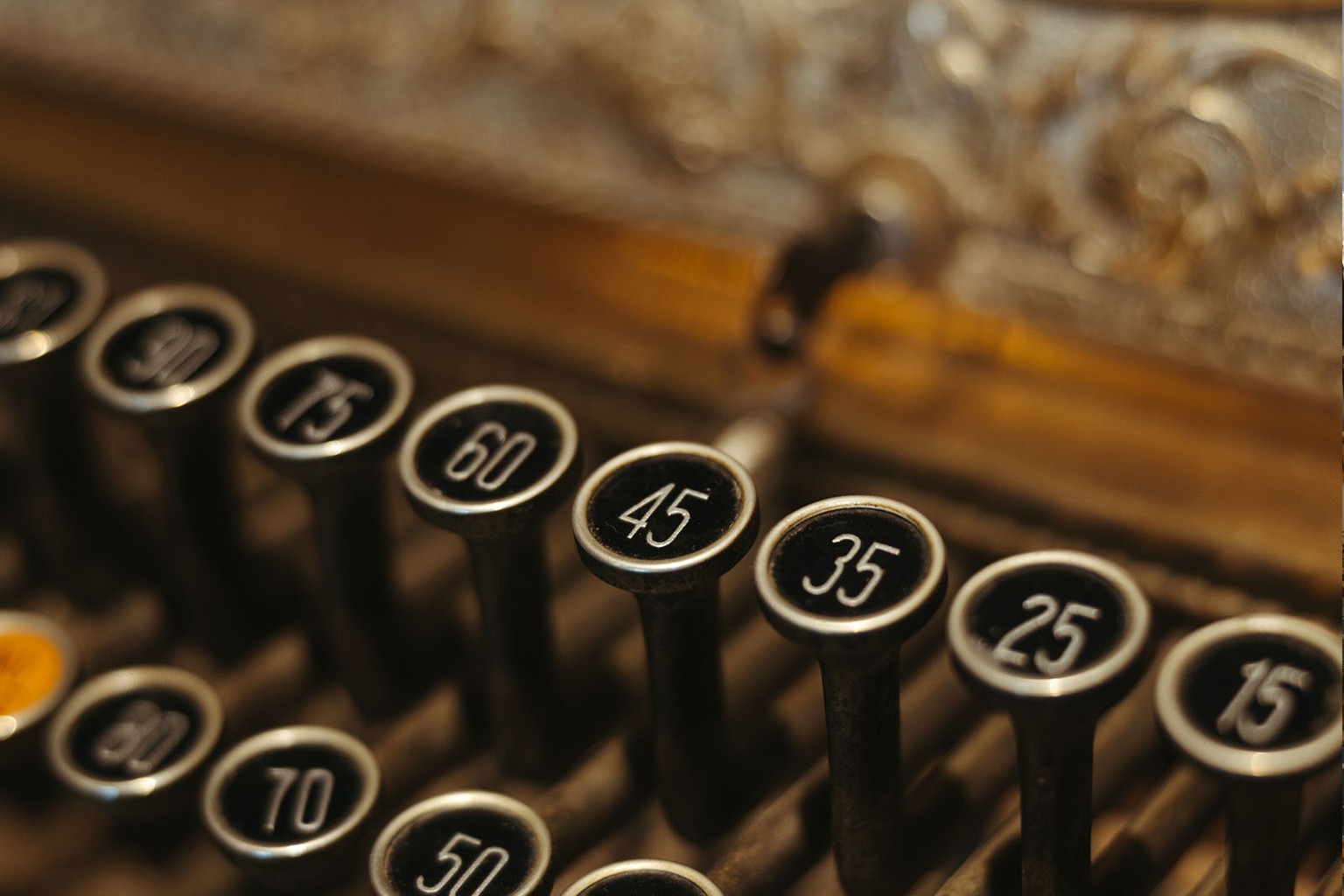
The keys of an antique cash register at the Hôtel Victoria.
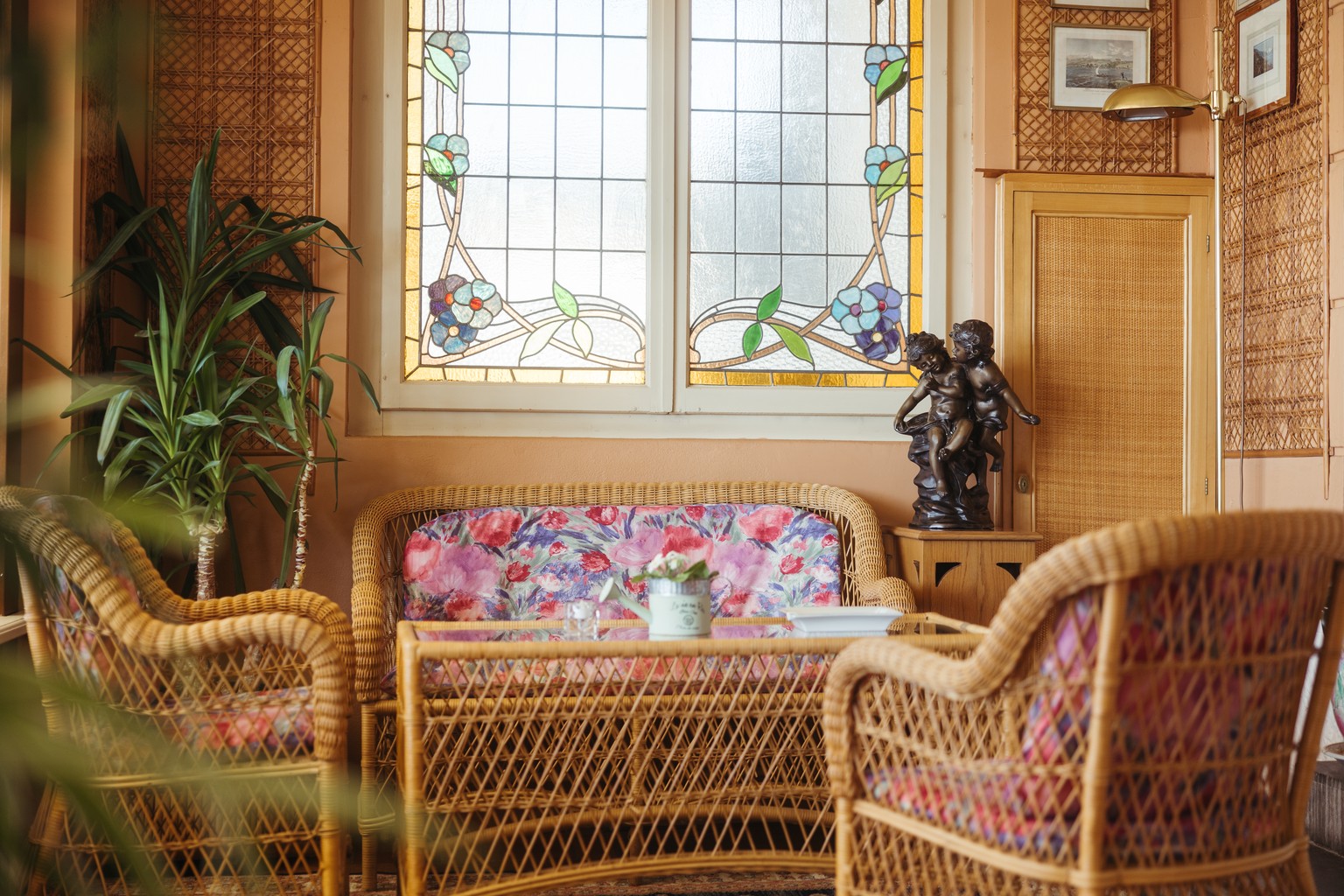
The relaxation corner of the winter garden at the Hôtel Victoria.
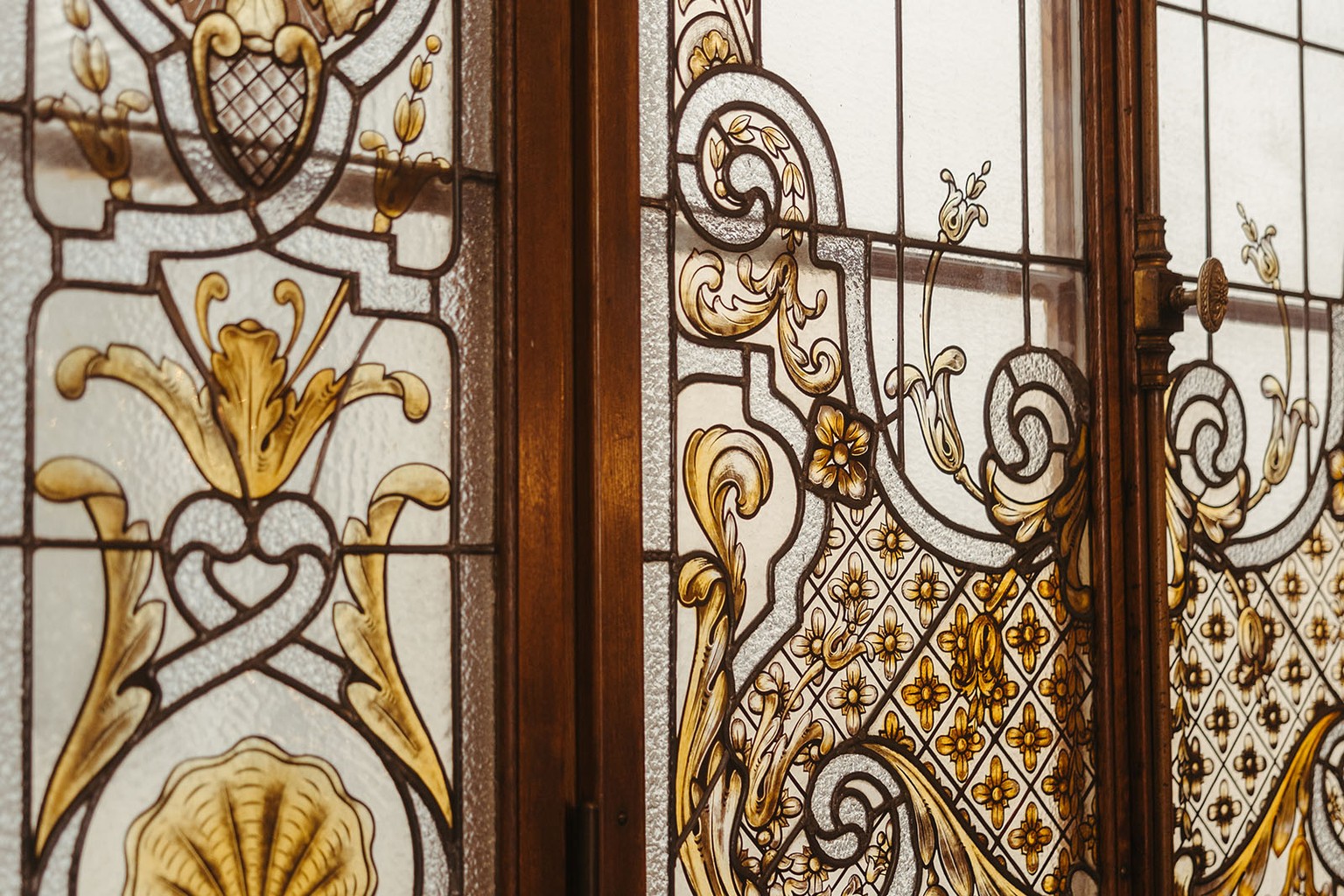
The subtle tones of a 1906 stained-glass window at the Montreux Palace.
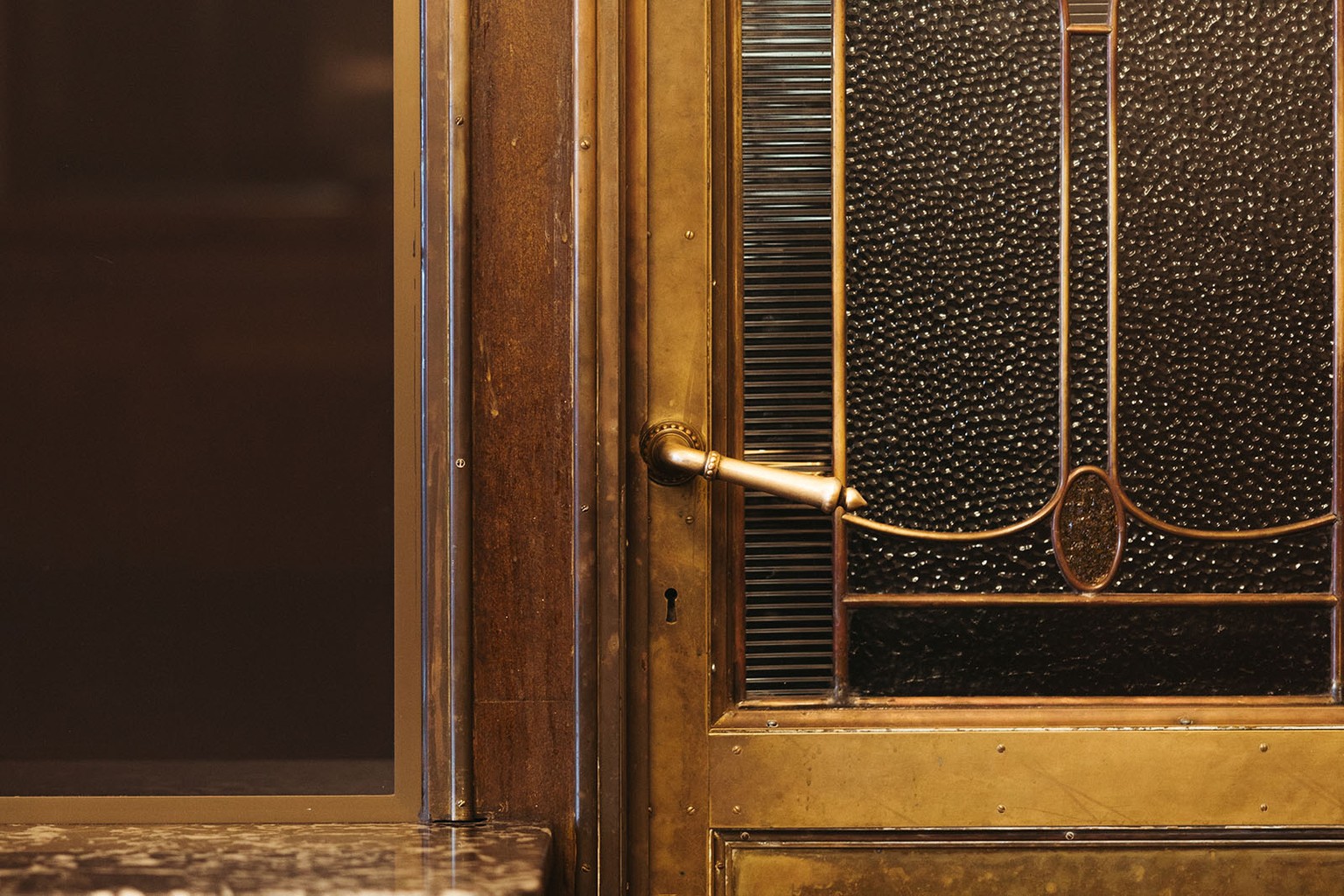
Der Türgriff der ehemaligen Loge im Montreux Palace, hinter dem sich der Tresor verbirgt.
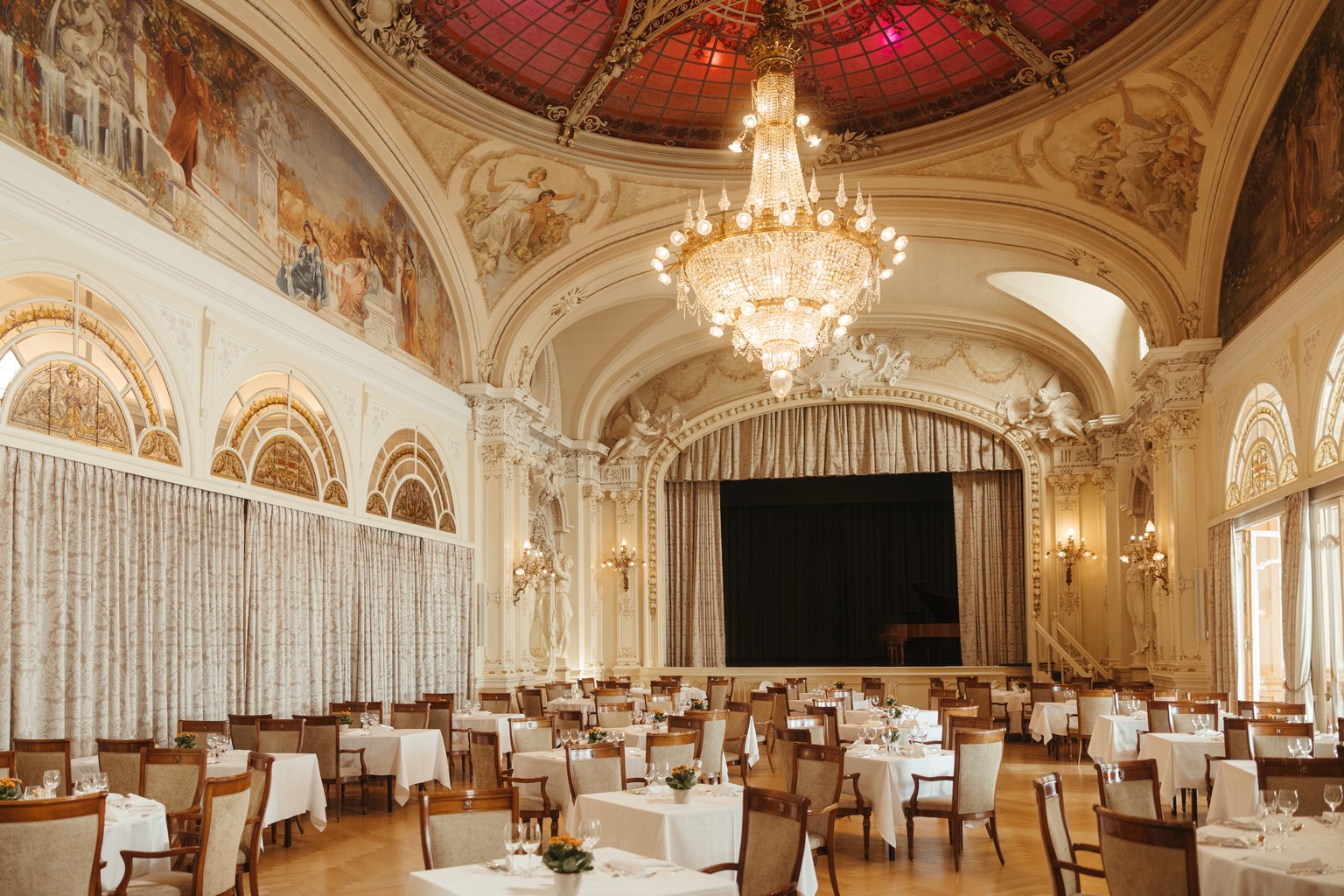
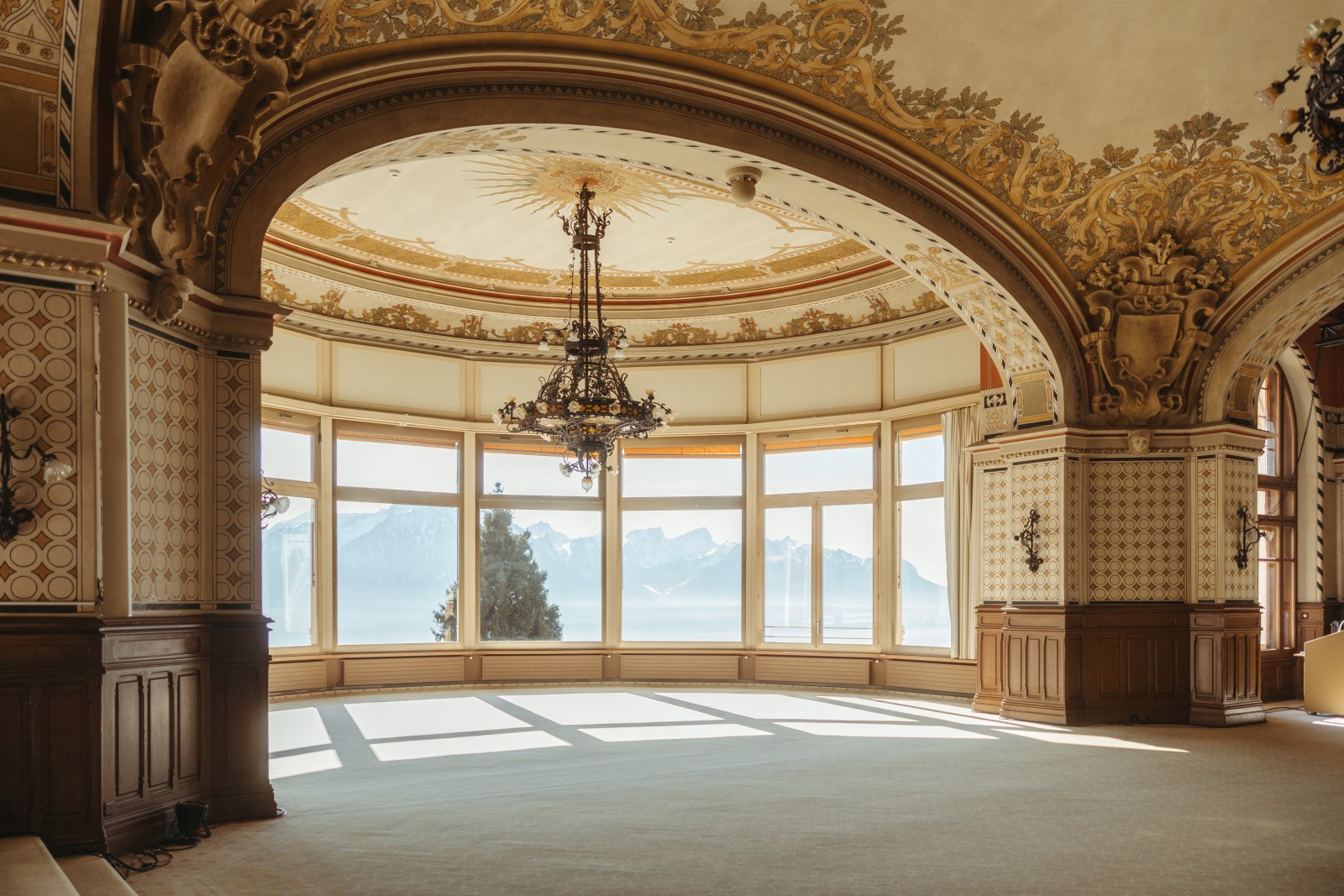
The ballroom of the Montreux Palace, bearing witness to the luxury of the Belle Époque.
“The steep slope and the rattle of the moving railcars heightens the atmosphere of departure”
Alexandre C.
The Orient Express used to stop at Territet
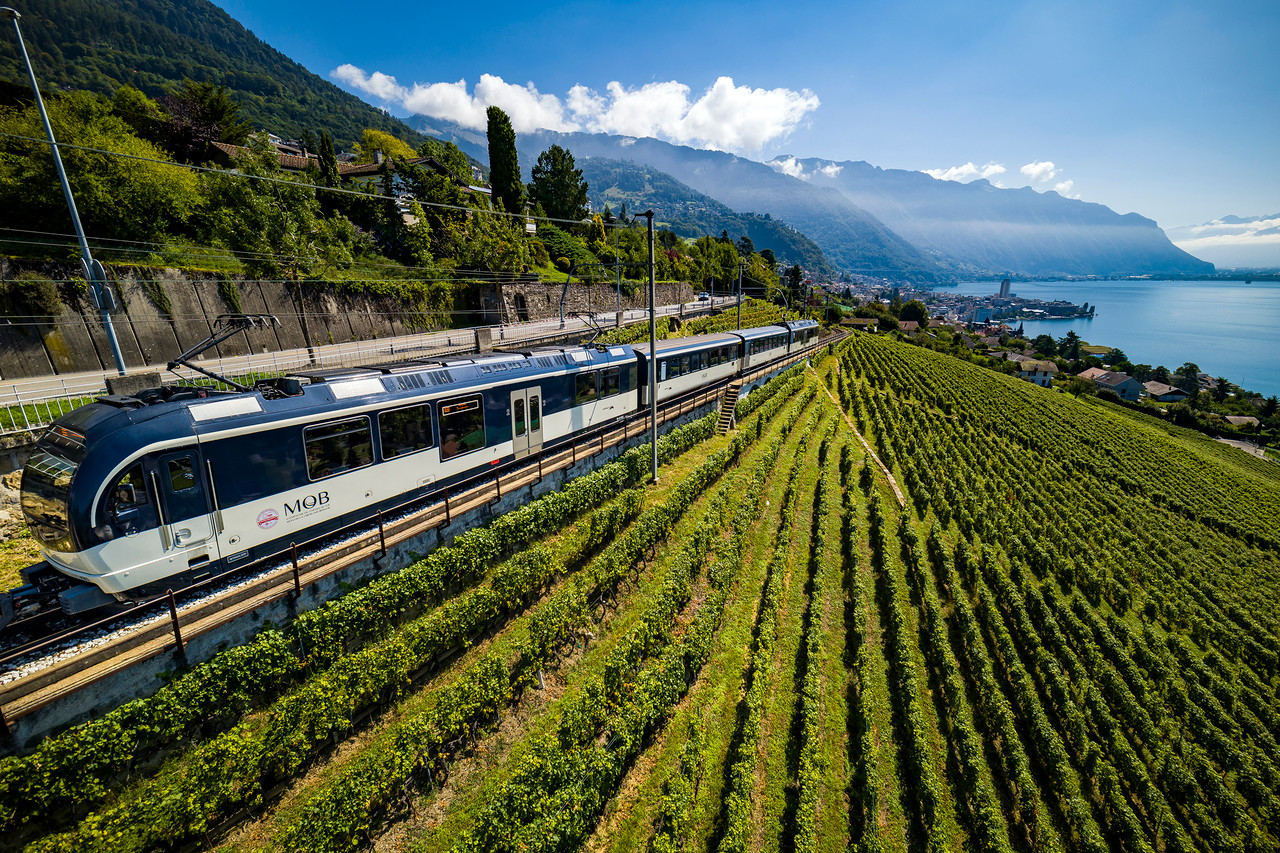
Nowadays, passengers on the MOB's rack railway are likely to come across young skiers, a Chinese tourist carrying a selfie stick and giving a running commentary on his trip, or perhaps a tender private moment between father and son. The steep slope and the rattle of the moving railcars heightens the atmosphere of departure. At the Glion-Alpes stop, linger to watch a black cat who is calmly awaiting the train's return. Look long enough and in your mind's eye the gleam of its fur gradually becomes one with the elegant cobalt sheen of the many bronzes displayed at the Victoria Glion.
During the Belle Epoque, the region was easily accessible, with the Orient Express stopping on request at the station in Territet. Today, you can rediscover a little of this magic with the two cars from the 1930s in the style of the Belle Epoque, which run between Montreux and Zweisimmen twice a day.
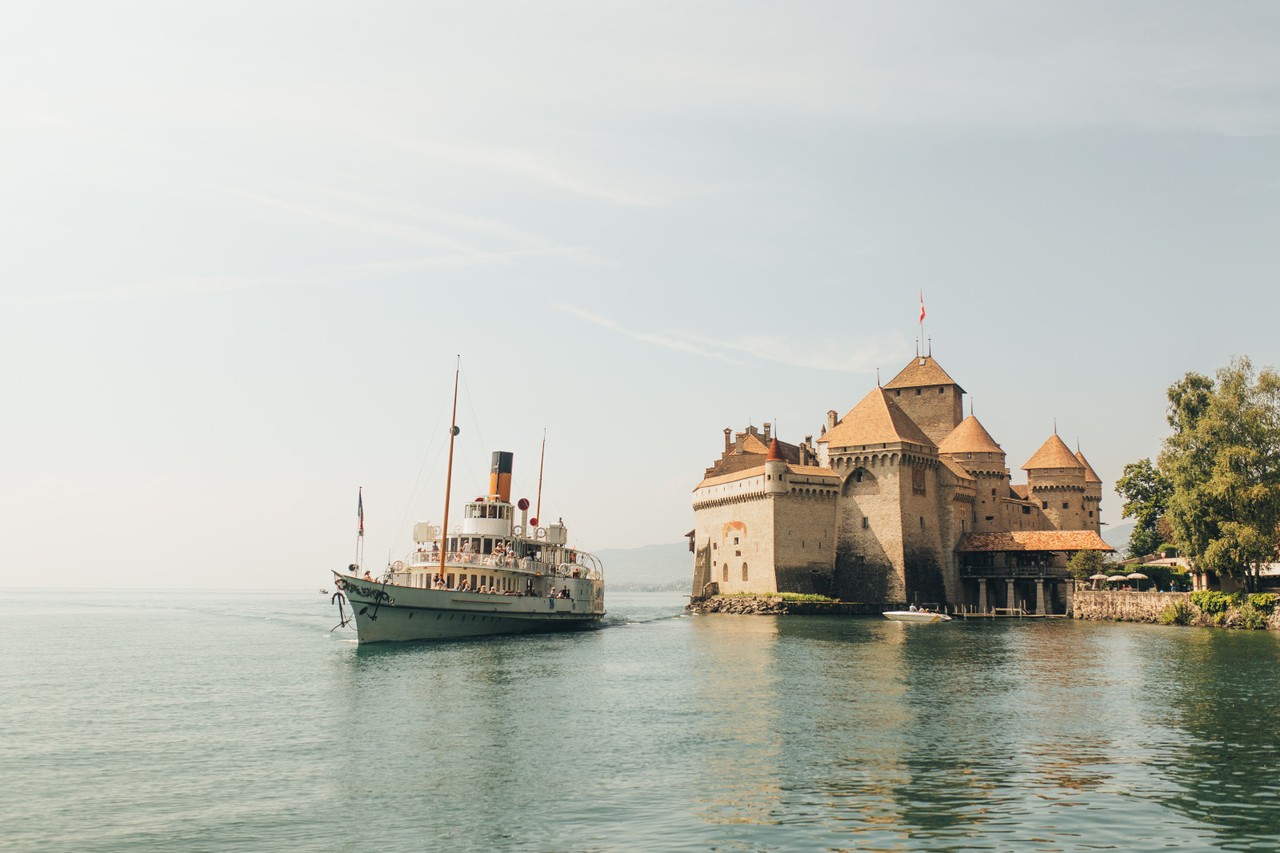
But before venturing into the mountains, make a detour to see the waters of Lake Geneva. Here the CGN navigation company operates its Belle Epoque fleet, the most prestigious in the world, with three paddle wheel steamboats, including the Montreux, which went into service in 1904. Vladimir Nabokov, who lived at the Montreux Palace for 30 years, wrote the following words: “The lovely dreaming lake, with green rippling edges, flounced with blue, stretched out before me, a vast, serene expanse, clear unmarked surfaces relieved by gently undulating patches…”
Let us now return to the Victoria at Glion, where in the restaurant we come across a painting of Lake Geneva by Eugène Burnand which is barely distinguishable from the lake facing us. Falling further into our reverie, we notice an accessory of the era: a bow tie worn by a young waiter working at the hotel. His fine moustache and figure are reflected in the hotel silverware, which is polished to a high sheen once a month and used on a daily basis. In the hotel kitchen, head chef Gilles Vincent remains true to authentic Lyonnaise-style cuisine, with meat being carved at the table, in homage to one of its prestigious guests, Paul Bocuse.
In 1906, the Maharaja of Baroda commissioned furniture for the Caux Palace to be made from lemonwood, as he found its distinct citrus scent was beneficial to his health. These furnishings bring a touch of lightness to a decor that overall is rather somber. It is amusing to discover a trace of lemon oil in the pumpkin soup served at the Montreux Palace, adding a floral note to the palate. There is a striking contrast between the urbane rhythm of the international luxury hotels in the center of Montreux and the traditional measured pulse of the establishments at Caux and Glion.
In just a few minutes, there is a complete change in atmosphere: the dandyism of the lakeside gives way to the natural sobriety of the uplands. And, in a rush of nostalgia, we see a picnic hamper displayed at the Montreux Palace, adorned with shiny silver fittings and well-kept leather, and imagine guests dining on the lawn, between top hats and baseball caps worn back to front. This Belle Epoque, resounding to the beat of David Bowie's Stardust Memories throbbing all night in the function room of the Montreux Palace, forms a poetic bond, a raft linking all the timeless impulsions of the Riviera.
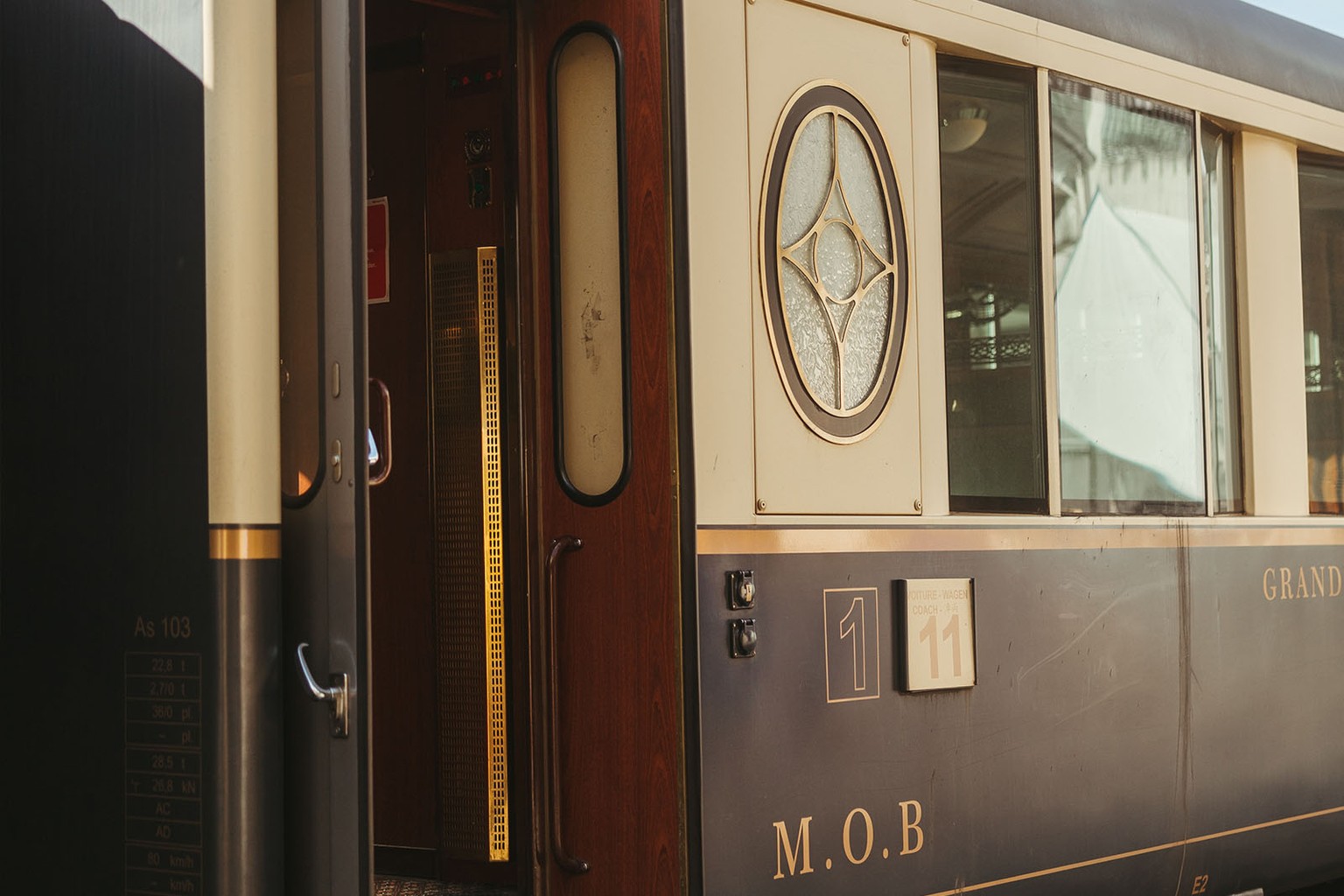
Behind the door of the MOB Belle Époque carriage, plush armchairs await you in a setting worthy of the Orient-Express.
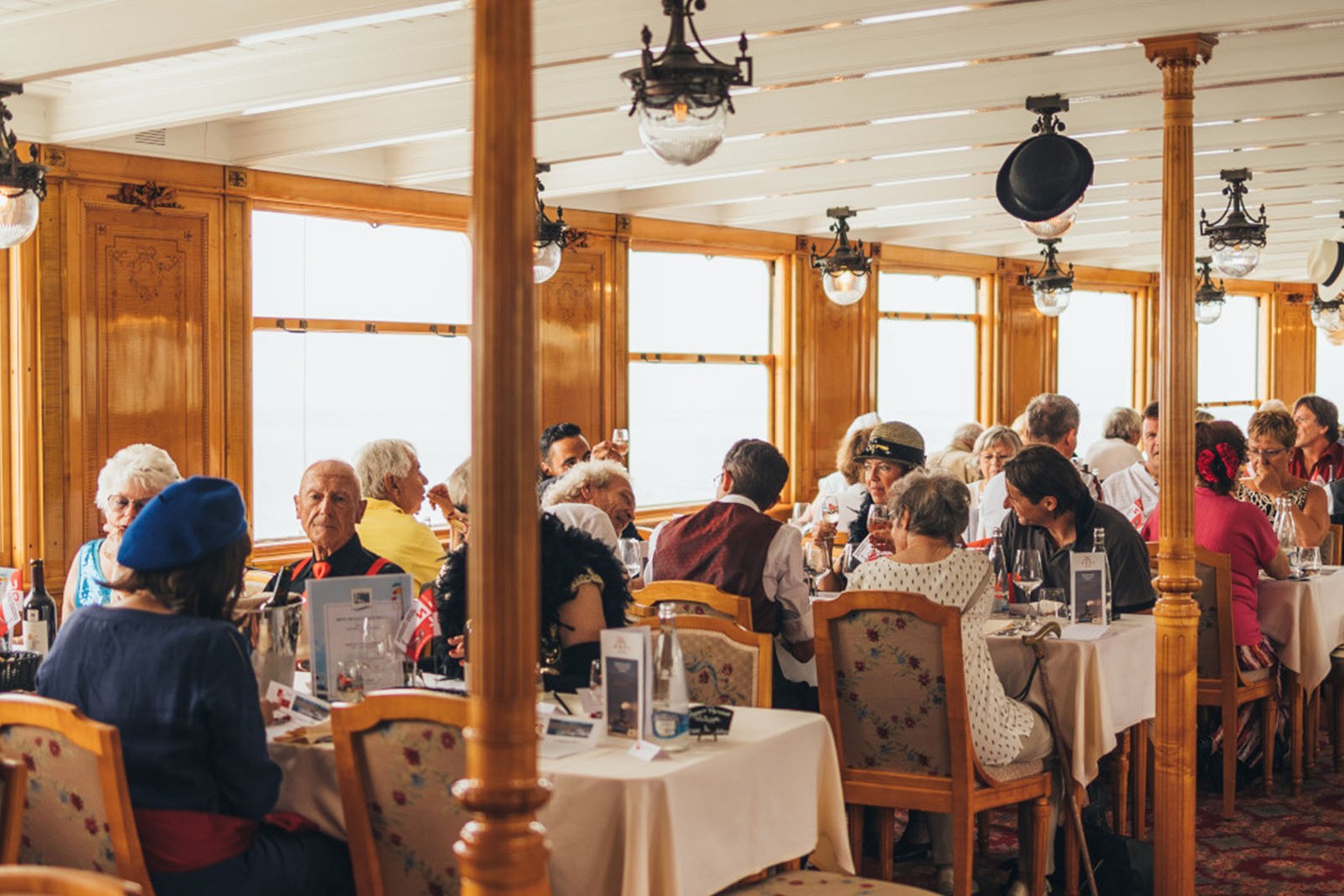
The marquetry woodwork in precious wood of the dining room on a Belle Époque CGN boat enhances your meal.
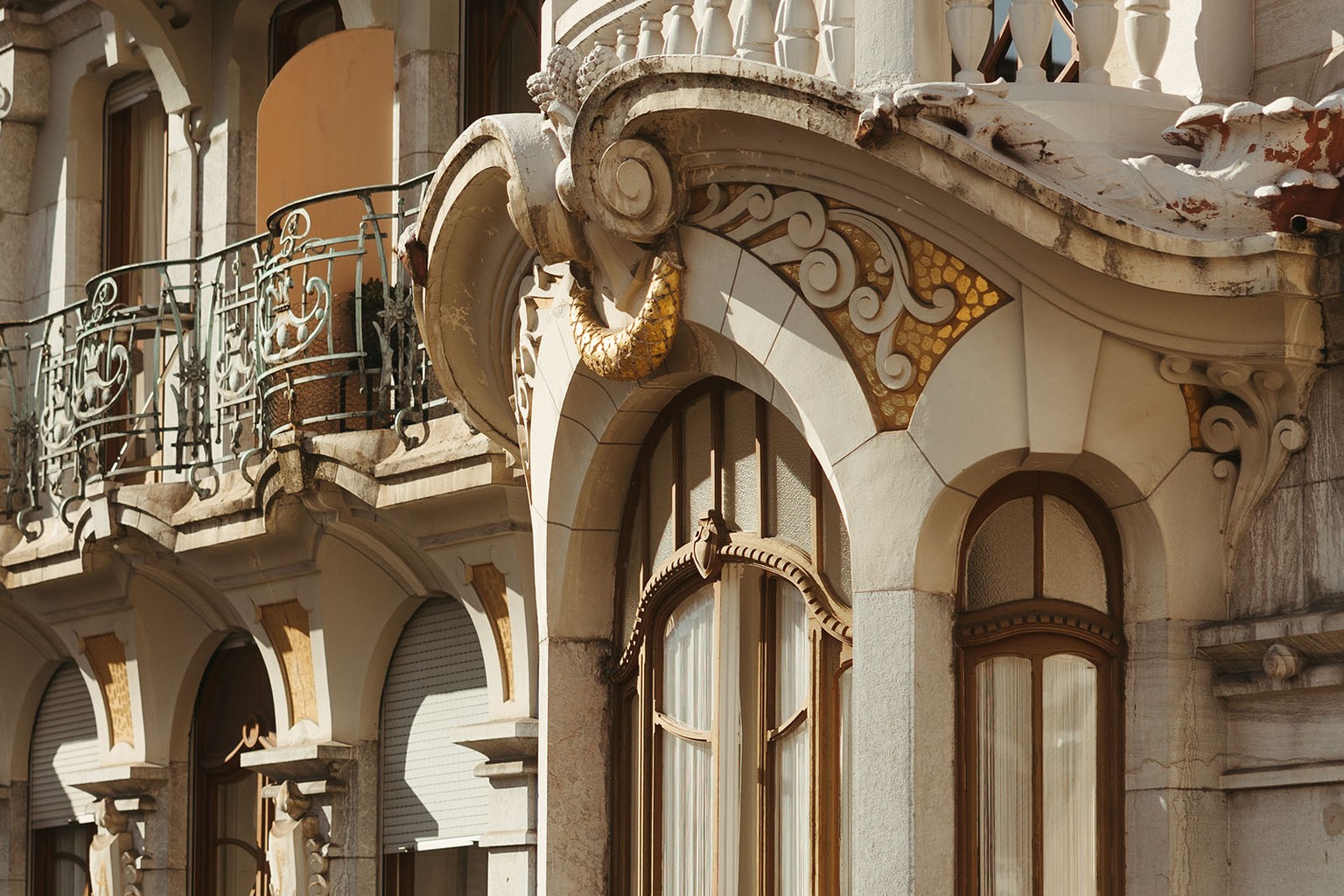
The oriel bay window of the former Hôtel Moderne, opposite the station, embodies the richness of Belle Époque decor.
“A belle epoque that forms a poetic bond linking all the timeless impulsions of the riviera”
Alexandre C.